Wednesday, October 31, 2012

KILL THE FILL

The recent waste management crisis in Bangalore has raised a lot of eyebrows and suddenly everybody seems to be panicking. The reason this story needs to be told is because most of our urban cities are heading towards this crisis. It all started when the villagers near one of the landfill started to protest and stopped the garbage trucks from entering their village. BBMP’s efforts to lure them with extra tax and development failed and the protests spread in villages around other landfills. All this happened in a span of less than two months and a notification was finally passed to ensure mandatory segregation of waste at source.

Some of us have been working closely with the govt. on the issue and the industries, NGOs, citizens are all out there to help the govt. in solving this. We all realize that it’s a collective responsibility. However, one month into the new rule, things have started falling apart and there is a complete failure in governance. According to the plan, wet and dry garbage was supposed to be collected separately. Wet waste had to be sent to biogas/composting plants and dry waste was supposed to be handled in collection centres in all wards. But on ground not much is happening. We have piles of garbage lying on the roads and the western media has also started to make noise about this. The articles in New York and Seattle Times have reminded us that the world is watching.

Couple of days back, I was shocked to know that BBMP have started illegally dumping garbage in Bettadasanapura, a village just on the periphery of Electronic city. Hundreds of trucks filled with garbage from Bangalore were being dumped every day and protests from villagers and resident associations in ecity couldn’t do much as the garbage was being dumped under heavy police presence. Electronic city Industries association decided to join the protest and on 30th Oct and we sent out a mailer to employees of Bangalore DC asking to join the protest. Soon after that, I received several mails asking us why we are pressuring BBMP instead of helping them. We are pressuring BBMP not to go back to the unscientific methods for the below reasons.

The newly identified landfill is in middle of the village and there are 8 schools around it. The stink is unbearable and villagers have already started complaining about diseases like Dengue. It is extremely unfair for us to dump our waste in their village. Imagine your neighbor dumping their garbage in your backyard daily or imagine you going back to school after a vacation to find out that there are heaps of garbage stacked up next to your classroom. This is exactly what is happening here. The issue is not about landfilling in ecity, it’s about the very idea of landfilling. There are hundreds of solutions available to treat waste and land filling is definitely not a sustainable solution. Segregating waste at the source is the only way we can achieve sustainable waste management and it is important that all of us start practicing it. This has worked for many Indian cities like Surat, Pune, Ahmedabad, etc and they are moving towards zero waste-to-landfill zones. We have an opportunity to make this happen and can’t give up at this stage and go back to landfilling.

Over the past couple of months, I have observed that segregating at source isn’t the problem. People are more than willing to do it and the Pourakarmikas who collect the waste are well trained and are knowledgeable enough to differentiate between wet and dry garbage. Try talking to them and you’ll realize that they are instructed to dump the garbage in a single truck. The problem lies somewhere between the grassroot and the top level and there is something fishy here. Transportation of garbage to the land fill and even managing land fill is a business worth hundreds of crores. Probably there are elements operating to ensure the segregation process becomes a failure. I don’t know but things like these make my belief stronger that there is a mafia operating in the system.

On the hand, a notification has been passed and citizens have been asked to dispose dry garbage only on Saturdays but we don’t see that everywhere. Solutions to this problem are simple. Let’s us try handling waste locally and change this habit of transporting our waste elsewhere.

We have spoken enough about the issue. While we need to keep the discussions on, it’s time we started doing things. Handle wastes locally. There are hundreds of people in the city who have been composting or producing biogas from wet waste. Let’s learn from each other and start implementing practices.

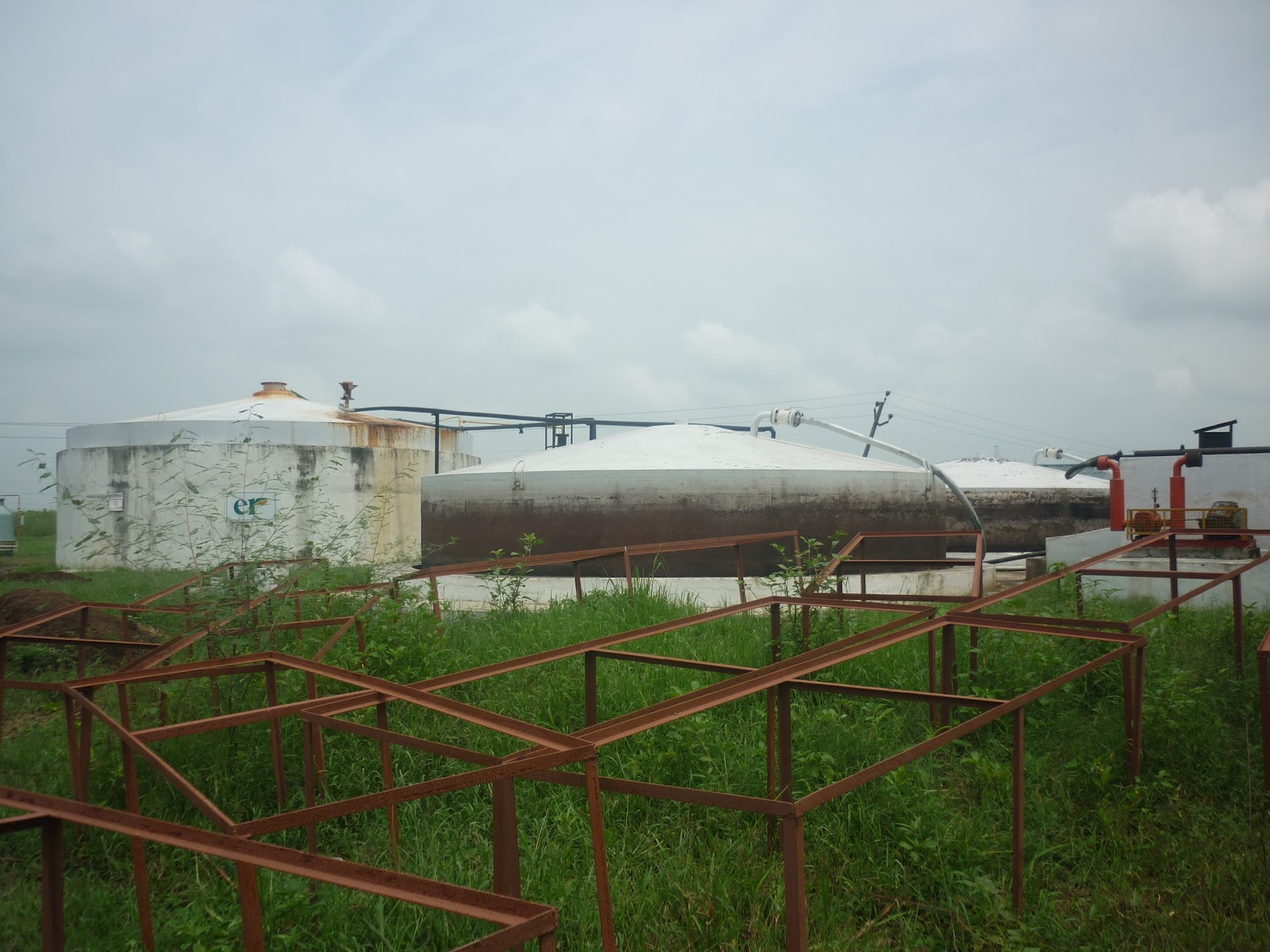
At Infosys, we have taken a zero-waste goal to will ensure all the organic waste such as food, garden and sludge are handled in our campuses either by setting up biogas plants or by composting. Other category of waste will be handled either in our campuses or will be given to authorized vendors and we’ll make sure that none of our waste end up in landfills. I can assure you that we’ll lead by example and demonstrate this to world soon and also look out for the transformation in electronic city. There are many inspiring stories in Bangalore itself. Malleswaram is a very good example for this. We can’t give up after coming so far. Let’s save Bangalore!

P.S.: Just remember: If you didn’t segregate your waste today, then you are the problem your city is trying to address.

Next time, I’ll write in detail about the technical solutions. Let me know your thoughts.

Photo courtesy: Sindhuja P

Sunday, September 9, 2012

Visit to Goraj – The Sustainable ashram

Solar thermal - Parabolic reflectors
I had heard a lot about the sustainability story of this place in Gujrat from one of my mentors at work. After planning for  weeks, I and my colleagues finally managed to block the calendars of Vikram and Deepak who are the men behind Muni Seva Ashram. The word ‘Ashram’ is usually associated with religion but this place has no such associations.
Cancer hospital
Three of us from Infosys landed in Baroda on the evening of Sep 2nd and then hired a cab to Goraj, which is an hour drive from Baroda airport. We checked into our air conditioned rooms and I almost forgot that I was in a remote village in India. We met Vikram and Deepak in the meeting room and they started briefing us about the projects implemented in the ashram.This place has electricity 24X7 and is powered mainly by Solar and biomass.  Solar lighting, heating, air conditioning, cooking; biogas, biomass gascification, cyclotron, plasma pyrolysis, water treatment plants, organic farming in a 700 acre field, residential school, state of the art cancer hospital where treatment is affordable to people even from the rural villages, home for the mentally challenged, Senior citizens, Orphanage, Nursing college, animal house, biogas bottling plant are some of the projects and the list goes on. Deepak brought solar thermal technology to India way back in the 80’s and it is widely used in the ashram. The best part of the whole concept is that they have not only achieved environmental sustainability, but also significantly impact the social and economic dimensions. They are 70% economically sustainable and I feel this is an incredible achievement.

Although they are supported by donations, this is no charity stuff. Vikram happens to be a doctor by profession, but is also the mastermind behind most of the engineering projects here and is a passionate farmer. Deepak left Germany and came back to India and his work here will definitely inspire generations to come. Over the next two days, we visited their project sites and had extensive debates and discussions regarding various case studies, models, technologies mainly concerned with rural areas. For me personally, this visit was enlightening.


Biogas bottling plant


My area of interest is biomass energy recovery and I visited a CBG (biogas bottling) plant for the first time here. I spent most of my time here learning the practical knowledge of biomass gasification, bottling, advanced waste management solutions such as pyrolysis, etc. We visited many biogas plants and composting units and this tour has strengthened my belief that biomass is the future of energy sustainability.
Biogas plant
The residential school which they have built is located in a hundred acre farm where only organic method of cultivation is practiced. Huge parabolic reflectors are installed on the terrace of the building and the heat is used for cooking and boiling water.
Thick biomass, twigs and other hard woody materials are gasified and cow dung from livestock goes into the biogas plant.
Another interesting innovation which I came across in their kitchen was the solar cooker. Unlike, the conventional solar cooker which uses, water/steam as a source of thermic fluid, they use a specially imported edible oil which is used for heat transfer in the cooker and is a closed-loop system.


They have also built the world’s first Solar crematorium and have managed to convince people to use the service.
Solar crematorium


Solar air conditioning and VAM are the two main technologies used in cooling. The buildings are designed to incorporate natural ventilation and day lighting. Water recycling is 100 percent – They have a Sewage treatment plant in the campus and water recharging is done across their farms.
This place is a transformation and if you ever go to Gujrat, do visit Goraj and meet these men. It’s a remarkable story of Sustainability and if we can replicate this model in our cities and villages, the entire country can achieve resource sufficiency.

Thursday, June 30, 2011

Whose line is it anyway?


Amidst the snow capped mountains, beautiful valleys and sparkling rivers lies an electrified 550km long fence along the 740km line which happens to be one of the most disputed regions man kind has ever known – The Line of Control. Over the years, millions of people have been displaced from the surrounding region making it a humanitarian crisis.

History of the Kashmir Issue:

The day was October 25th 1947 when Maharaja Jari Singh, the ruler of the princely state of Jammu and Kashmir signed the Instrument of Agreement with the Govt. of India and chose to accede to India, and then Kashmir started claiming lives. Following the insurgency by the Pakistan militants and the tribesmen in the region, the National Conference worked with the Indian Army and this resulted in the first Kashmir war.

Violations of the UN resolutions:

In 1948 India moved the issue to the United Nations which brought a resolution stating that Pakistan would have no say in Jammu and Kashmir politics, India would retain a minimum military presence and the final disposition of the State of Jammu and Kashmir will be made in accordance with the will of the people expressed through the democratic method of a free and impartial plebiscite conducted under the auspices of the United Nations. India and Pakistan both agreed to the resolution but Pakistan didn’t withdraw its troops from the region.

Indo-Pakistan wars over Kashmir:

1947: The war ended resulting in the implementation resolution 47 by the United Nations and the Cease fire.

1965: Pakistan tried to infiltrate into Jammu and Kashmir and India responded strongly resulting in the largest tank battle since world war -2 and this ended with the UN ceasefire.

1999: Pakistan’s attempt to infiltrate into the Kargil region was foiled by the Indian army.


Terrorism and infiltration:

When Pakistan forces’ repeated attempts to invade the region were foiled by the Indian army, they turned towards militancy. Infiltration started right from when Kashmir chose to be a part of India and since then, the militancy has constantly increased resulting in unrest in the valley. Thousands have been murdered in the name of Kashmir; the Parliament attack and the recent terrorist attack on Mumbai shocked the world. The whole world is aware of Pakistan and ISI’s link with the terrorist organizations and yet we all have failed to dismantle the terror network.


Solutions:

1. The terror network in Pakistan has to be dismantled by the international community and we need to move a little ahead of the diplomatic ways.
2. Pakistan has to start focusing on peace and development. The issue cannot be resolved until they agree to the fact that terrorism is sponsored on their soil.
3. India has to realize that Pakistan is going to be our neighbor no matter what the crisis is. It should talk tough on terror and bring in International participation in dismantling Pakistan’s terror network. Development of Jammu and Kashmir should be the key focus of the Govt., not on paper but on the ground.


Hopefully at least after these critical tasks are completed, everybody starts considering the Kashmir’s voice and give back its lost identity. Over the years, millions of people have been displaced; thousands have lost their lives because the generations before us chose cultural and religious interests over growth, peace and harmony. We have lost our finest men on the front fighting wars but justice is still not done to them. Hope peace prevails.


** - I have tried to include a lot of facts rather than giving my views because I believe that it is only the Kashmir’s voice that should be heard and the rest of us should stop debating when it’s not helping the situation.

Wednesday, June 22, 2011

The architect of Indian Economy


The economic policies of our country can be placed under two major categories, the pre-Manmohan Singh era and the post-Manmohan Singh era. Amidst the haze of India’s economic growth and its strong influence over the world economy, we seem to have forgotten the silent, humble and the highly educated economist who laid the foundations for India’s economic growth.

The Pre-Manmohan Singh Era:
During the initial years of independent India, the economic policies were framed mainly based on the Soviet Union’s economic structure. The five year plans were framed on similar lines. The colonial exploitation of the resources and wealth from this country had a great influence in provoking the policy makers to follow the lines of Socialism and protectionism. Most of the key industrial sectors such as Automobiles, Mining, Telecom, Power, and Manufacturing were nationalized in an attempt to make Indian economy self-sustainable and minimise the influence from other world economies. Regulations and rules for obtaining licences for the industrial sectors were very stringent and they were controlled indirectly by the central government through the state governments. There have been cases where the manufacturers had to obtain permissions from about 70 agencies and yet the state govt. would decide the source of capital and control the process. The era has also witnessed a record taxation of 97.5% on the industries during 1970s.
There is no doubt that our grievances against the British Empire had a sound basis. As the painstaking statistical work of the Cambridge historian Angus Maddison has shown, India's share of world income collapsed from 22.6% in 1700, almost equal to Europe's share of 23.3% at that time, to as low as 3.8% in 1952. Indeed, at the beginning of the 20th Century, "the brightest jewel in the British Crown" was the poorest country in the world in terms of per capita income.
–Manmohan Singh


The Crisis:
The stringent reforms and the stubbornness to keep the industrial sectors under the control of the central govt. took a toll on the economy. The growth rate of India’s economy had reached a low of 3.5% by the year 1991 and India was almost bankrupt by then. The bailout by the International Monetary Fund came at a price – Rupee was devalued and economic reforms were forced upon India.
The Architect:
Manmohan Singh was born to Gurmukh Singh and Amrit Kaur on 26 September 1932, in Gah, Punjab, now in Pakistan. He got his bachelor's and master's degrees in 1952 and 1954, respectively, standing first throughout his academic career. He won the Wright's Prize for distinguished performance in 1955 and 1957. In 1997, the University of Alberta awarded him an Honorary Doctor of Law degree. The University of Oxford awarded him an honorary Doctor of Civil Law degree in July 2005, and in October 2006, the University of Cambridge followed with the same honor. In 2008, he was awarded honorary Doctor of Letters degree by Benaras Hindu University and later that awarded honorary doctorate degree by King Saud University.
The Post-Manmohan Singh era:
P.V. Narasimha Rao was the prime minister in the year 1991 when India was facing one of the worst economic crises. The entire policy structure had to be changed and the pressure from IMF to remove ‘Licence Raj’ was adding to it. This was the time when then the expertise and the experience of Dr. Manmohan Singh was sought and he was made the finance minister. His challenge was not only to get the country out of the crises, but also lay the foundation for liberal economic reforms in the country.
When he approached P.V. Narasimha Rao with the liberalization policies, he was patted at his back and given the freedom to implement his ideas. This was a significant point in history as the forty year old custom of protectionism was suddenly overturned and the gates of the Indian economy opened to the world. One of the key steps he took was to move most of the industrial sectors from public to private sector.
When the historic budget of 1994-95 was presented in the parliament by Manmohan Singh, the world turned its eyes towards India. The taxation was reduced, foreign investments were encouraged and the privatization of the industries was suggested in the budget. This phase of economic reforms is referred to as the ‘Economic liberalization’.
Since then it’s been a success story. Today we are the 10th largest economy in the world in terms of nominal GDP and 4th largest in terms of purchasing power parity. We have continued to grow and change the economic equations over the years.
Manmohan Singh may not boast about his work during the political campaigns or interviews, but the fact remains that he is the architect who laid the foundation for building this country. Until we have such fine men leading from the front for this country, we can be assured that our economy is in safe hands.

Thursday, May 19, 2011

Games Indians Played

Just a month ago I was out on a family get together at a resort near Bangalore and had a tough time consoling my six year old niece. Guess why? Her crops were getting destroyed on her farm and she wanted to harvest them. I didn’t complain because even I was worried about my farm. Yes!! I’m talking about the facebook game that made it to the Time magazine’s ‘50 worst inventions’ – Farmville.
It is an interesting phenomenon how the digital media has revolutionized games and toys in this country. When I grew up during the 1990’s i.e., the gilli danda generation, sports was very real and the spin of a simple mechanical top or the buguri made me feel on top of the world. It really didn’t matter if you were a bad athlete or had bad a memory, there was a game just to suit you. Hopscotch, Hide 'n Seek, Checkers, gilli danda, lagori, chain cut, dabba, lock and key, chocolate box, the list goes on. And if you are bad at all of these, never mind because there are trump cards where you don’t have to lose all the time.
Back then most of us didn’t have a great deal of money and the concept of pocket money was just budding. We made toys with things lying around our neighbourhood; sticks, leaves, stones – these were enough for us to invent a game. Just think of your childhood for a minute and you will realise the massive change in the attitude. When was the last time you saw kids playing with marbles or the skies filled with kites? Have you seen any paper boat sailing on the water-filled potholes during rain recently? The hectic and mechanical lives of ours are being reflected in today’s toys.
The pressure of work, studies and career are taking a toll on us these days. Children no more have the time to mingle with their neighbour’s kids as every child is busy with cricket coaching, tuitions or playing games on computer. Just when we thought virtualization of sports was rampant another hindrance arose – The facebook addiction. The kids these days are busy sending poker and black jack requests to their friends on facebook and hence have no time to play with rock and paper.
People's perception of gaming has changed in the last few years. It has gone from being a product for a cult group to a lifestyle product. India’s video-game console market has grown to $125.4 million in 2010, rising at a growth rate of 75 percent from $13.3 million in 2006.
Somebody said I know my great grandfather existed because I believe he did and I’m afraid my kid would not believe that if he doesn’t find my great grandfather on facebook. Ironic it may sound, but it’s true.
Looks like we can never bring those games we played back to life. It therefore becomes my moral responsibility to remind all of you and document the games we played.

Wednesday, July 8, 2009

Tadiyandamol trek - Coorg trekking


Level: Easy to moderate(In spring and summer)

Moderate(In the first two weeks of july - heavy rains)

Rainfall: About 15-20 times heavier than the heaviest rainfall in Bangalore. And it rains 24hrs. a day.

I've done some of the toughest treks including the ones where I was attacked by a Gaur, got lost in W.Ghats, encountered lots of wildlife, stayed in the jungle without kerosene n food for two days n lots more. But this one doesn't have any experience like that yet its very different from all the previous treks. It was a proper monsoon trek.

We started from Bangalore at 11:30 pm and reached Virajpet(Coorg) at around 5'O clock in the morning. We then walked to the private bus stand n caught a bus to Kodikeri----> Kakkabbe n had our breakfast there and reached the base camp by around 10:30 am. The localites told us not to go for the trek coz the rainfall was at its highest n the path was converted into streams. You might have known about this through the news channels that people travel in boats in Bagmandala n stuff. But all of us had just written our 6th sem(VTU) exams and hence were desperate to achieve something :P
We started our trek from the base camp and walked along the path. It was raining heavily and the leeches had a treat. The path was covered with flowing water and it was up to knee-level in most of the places.


After walking through the terrain for sometime, we met a group of trekkers who couldn't complete the trek coz the route was completely blocked. We continued our trek and after sometime we reached a pond.! Yes..a pond was formed on the mountain n there seemed to be no way forward. Probably those trekkers whom we met on the way were talking about this point.

We followed the stream flowing out from there..it narrowed down at some point n we crossed it n walked through the elephant grasses. Remember this place is abundant with the Pit vipers n many poisonous creatures. We saw a trail soon n followed it and reached the peak by around 1:30 pm. But we couldn't stay there for a long time coz the rains were pushing us down. We then walked to the base camp(aramane) at around 3:30-4:00 pm and reached kakkabbe in an auto. After having our lunch there, we took an auto to Napoklu n stayed in a room. Next day at around 2:00 pm we took a bus to Chendanu n started walking towards the Cheluvera falls. Let me tel u this isn't a v famous place n hence very few people visit this place. After walking for sometime along the road, a jeep stopped by us n offered us lift. The hospitality of Coorg is comparable to that of Uttara kannada. Its just too gud. We reached the water falls n it was Awesome..It cant be expressed in words. Whats more interesting is there is a govt. primary school next to it n they told us the children walk at least 10-15 km. a day to the school.!


After staying at the base of the falls for sometime, we trekked to the top of it and we were shocked by what we saw. There was an abandoned house where people don't stay for 3 months during the rainy season, a farmland n a mighty mountain in front of it.! We never thought such a place could exist there. We had our lunch which we'd got it parcelled from Napoklu n somebody walked towards us from the mountain. He told us that mountain was Somangund, the second highest peak in Coorg and you would reach Kerala if you trek for about 10km. from there. But its a thick jungle n the chances of reaching Kerala are very less.


We walked back to Chendanu and caught last bus from there to Virajpet n reached there by 7:00 pm. Our bus was at 10:15 pm n hence we decided to roam around the town..Its a pretty small town. So we roamed the place thrice n had food at every eat-out there. The best part of the trek was rains and the worst part was too much rains.

If you r doing this trek in the end of July or in Summer its not difficult but still I would suggest you to try this place. Its really worth it.!


-Vishwas.V

Team members:

Name: Vishwas. V
College: DSCE (BT)
Age: 20

Name: Nitin. G
College: BNMIT (EC)
Age: 21


Name : Vinod.R.M.
College: Don Bosco(EC)
Age : 21


Name : Pavan.Y.
College: KSIT(Mech.)
Age : 21

Monday, June 1, 2009

Light at the end of the tunnel - Dudh Sagr trek.!

This is a trek which we completed many months ago but I now finally got time to write about this amazing trek. After completing some twenty treks..most of it in the Western Ghats, we felt we had to do a different kind of trek and we decided to go on a railway track trek to Dudh Sagar which lies in the Karnataka-Goa border. We had no idea about the place n stuff as none of us had done this trek before. We searched for information about this place on net and booked our train tickets to Castle rock from Yeshwanthpur. We were five of this time and played rummy til late night during our train journey. At around 3am we reached Castle rock and got down with our backpacks. We then started walking in the pitch dark along the railway track and through the tunnels and paved way for the fast incoming trains. After some two hours we realised we were missing out the scenery and decided to sit in the tunnel and have our early morning breakfast. For those of you who don't know about the location let me tel you this place is a heaven. It lies amidst the thick jungles of the Western ghats and the track follows a hell lot of tunnels and old slippery bridges. There is no roadway in this place. At the beginning of dawn we could see things clearly around us n trust me I cant explain the beauty of the place in words. For those of you who love photography this is the place to be.! We walked for some three hours from then and at around 8:45am we reached Dudh Sagar station..Its just a platform where trains exchange tracks. We couldn't find anyone there and we had no idea how to reach the falls but we could hear the roaring water. Then we spotted the Station master n he told us there was no train that day in that route and we'd to walk all the way to Madgaon(Goa). We were already tired and thought we would first sort out this issue n then go to the world famous falls. He then contacted the Castle rock Station and found out that a Goods train had just left Castle rock and that it would reach Dudh Sagar in sometime. We then dropped our backpacks there and walked to the falls. It was Amazing. It is one of the biggest water falls in the country and the water actually falls on the track near it.! We screamed out of joy to our limits but sadly couldn't stay there for long as we had to run back to the station. The Station master told us ways to get a lift in a train. We went n stood at the place where the engine was supposed to stop n got ready with our backpacks. The train arrived in sometime n we used the tricks taught to us by the Station master..i mean we had to salute him first n speak to him in kannada n tel him we were students..Guess what it worked.! We actually got a lift in the four-engin long Goods train and for the first time in life I actually got to travel in the engine..It was an awesome experience.! The train then passed by the falls n the water splashed on to us..n passed through some strange stations actually platforms like Sonalium n stuff. It seemed like we were in some radioactive site..lol.! The train travelled at around 20km/hr speed coz it was a Goods carrier n we were in the Ghat section. The driver moved the train only using brakes after he accelerated at the Dudh Sagar station. We reached Madgaon at around 12:30..it took three hours to cover just 40km. by train.! But anyways thanks to him that offered us lift. I then thought of paying him something n went to offer a 100 Rs. note n he blasted me for it.! How nice.? I'd never thought that somebody wouldn't accept money for that great help. He then guided us to reach Panjim from there n went to the office. By then none of us were in a position to walk n we caught a passenger train to vasco. We were very lucky to get a lift or else we had to walk 40km. more that would have been more than 65km. in total. After that we reached Panjim n I guess no need to write from here:-)

- Vishwas.V

Team members:

Name: Vishwas. V
College: DSCE (BT)
Age: 20

Name: Nitin. G
College: BNMIT (EC)
Age: 21

Name: Pavan Acharya
College: BMSCE (IT)
Age: 20

Name : Vinod.R.M.
College: Don Bosco(EC)
Age : 21


Name : Pavan.Y.
College: KSIT(Mech.)
Age : 21


Saturday, May 30, 2009

My footsteps into the Indian Stock Market..


On Jan 19, 2009, I got a good business and earned some 15k in that week. Two weeks before that..to be precise on Jan 9th the Corporate India was in for a shock coz the markets didn't seem to recover soon. It was the 7000 crore Rs. Satyam fraud. For those who didn't understand economics, the newspapers were just a piece of crap coz there was nothing other than this news. The Stock Markets had collapsed and the investors had lost faith in the stocks. Just check out these figures:

Satyam Stock lost 77% of value and is ended the day at 40. 14 crore shares were traded in the BSE Sensex while 33 crore shares were traded in the Nifty.
On December 16, when Satyam Computer Services (Satyam) declared that it wants to buy Maytas, it triggered investor activism, forcing the software giant to retract.
Buoyed by the power of shareholders, fund houses started stocking up the company’s shares, lured by its strong balance sheet and cash reserves of Rs 5,040 crore. Fund houses, including HDFC Mutual Fund, Tata Mutual Fund, ICICI Prudential Mutual Fund and a host of others, hiked their stakes.

For instance, ICICI Prudential mutual fund bought another 35,00,000 shares (314 per cent) and HDFC mutual fund bought 54,00,000 shares (106 per cent). Others like Franklin Templeton mutual fund added 17,28,000 shares and Tata mutual fund bought 2,65,000 shares of the now-tainted company last month.

On Jan 09,2009 the share value reached an all time low of 11.50 Rs. By then the markets had lost about 2,600 crores. But this had kept the people on their toes and so was I. By the time I got my money for the business, I knew the moment had arrived. The share value had increased to 48.75 Rs. per share and it was on Feb. 6th,2009 I first entered the Stock Market. It wasn't a big risk that I took coz it was a long term investment for me. And now with Tech Mahindra taking over 38% stake in satyam I'm hoping the Share value goes up and I dont have to turn back.

Basic rule in stock markets:

Never hold even a single stock when a fraud is broken out in a Company. Exit immediately even with big losses. That's why Swiss Finance exited from Satyam with Rs 500 crore losses. That's why Aberdeen Investments exited with more than Rs 1,000 crore losses (estimates).

Thursday, May 21, 2009

A humanitarian crisis


Well.! I'm not talking about our own economy or the global economy and the recession factor. This is about the country miles away from all economic clusters, a country that has lost its way out o the political turmoil, a country where more than half the population dont have access to proper food, sanitation and health care is in the worst possible state. Yeah.! I'm talking about another African country - Zimbabwe. This is the country that houses the 'Victoria falls' and an amazing wildlife. It was once called the 'Breadbasket of Africa' but there are no more breads in the basket. Just take a look at these figures:

In 1983, USD $1= ZWD $1
In 2000, USD $1= ZWD $1000
In 2003, USD $1= ZWD $100,000
In 2006, USD $1= ZWD $500,000
In 2008, USD $1= ZWD $18,700,000,000
If you all remember, a few months ago in India the inflation figures rose to about 11.42% and there was panic seen clearly in our stock markets. Well.! U got to look at this - The inflation in Zimbabwe as of today(22 May,2009) is about 231 million percent. Today only about 6% of the population is employed and 8 out of 10 people in the country dont get one proper meal a day. You have people moving with million and billion dollar notes in their pockets but cant spend it coz it has absolutely no value. Inspite of all these problems there is very little aid available to this country from the major countries and also from the United Nations. Its an emergency situation for which the solution is simple but needs the involvement of the global community.
I won't go into the history but I'll brief you a bit about the history as it is important how the problem started.
Robert Mugabe, who helped end the white rule in Zimbabwe has been the President since 1980 and from then its been a one man's country. Mugabe's reputation has plummeted from an African liberation hero to a despot, who has ruined his once-prosperous country. The elections in the country is no more free and fair. Voting for the opposition could cost your life. The Police are themselves involved in looting the banks and markets. One of my cousin who recently went there was telling me how difficult it is to even walk on the streets. People come and rob you of any and every stuff you have. But you cant blame them either. When the govt. isn't providing any employment oppurtunities this is the only way to earn. The African Nations isn't doing anything coz most of the leaders consider him as a freedom fighter. A refugee crisis has stuck the neighbouring countries, China is donating weapons to Robert Mugabe and the United Nations is doing very little to solve this problem. Robert Mugabe is still the President. I think its peak time all the responsible countries of the world come together and bring down the political structure of this country and save the direct descendants of Adam n Eve, more importantly value the human lives.

"Welcome to Zimbabwe"

Wednesday, November 12, 2008

The Orange and apple debate.!

I'm writting this article as the health minister is in full mood to take d issue to PM.
Indian culture is one of the oldest in the world and its unfair to legalise homosexuality in our country.
We are bombarded by questions pouring in from television commentators, gay activists, politicians and liberal-minded publications - Dont Gay and lesbians deserve equal rights in society? Why do we have to care for what happens between two adults? Why not let em get married?
People who oppose the concept of being homosexual donot come out and speak coz they have the fear of being labelled 'ultraconservative'.
Firstly gay and lesbians have equal rights and are protected under the law. Let me wxplain - I can marry a person of my opposite sex and so can they and vice cersa. So we have the exact same rights. What they are asking is for "extra rights". There are many wonderful people on the earth who choose to be single and they are not complaining for not having the rights which the married people have.!
Why should such people be given such rights just because they choose to marry the person with whom they share the same anatomy?
Ok. Even if they achieve this status do you think its goin to stop there? Make no mistake. There is a deeper agenda at work here, even if all gays and lesbians were not aware of it.
Human beings always love to play with truth and change the meaning to what they choose to do at the moment.
The fact is, though not politically correct, gay marriages are unhealthy. They constitute less than 1% of our population and 45% of them have STDs. The risk of alcoholism, drugs and risks of sexual behaviour is high. This is not the culture the govt. should be encouraging.
The whole debate is about govt. legalising and calling it a 'Marriage'. Even if the congress pases a resolution and calls it a 'marriagr', does it become so.? Consider an orange and an apple. If the congress comes out tomorrow and says since both of them are fruits we got to give equals rights and passes a resolution saying an orange is an apple. Does an orange become an apple.? It doesn't make any sense. In the same way its about marriages also. U cant redefine the basic institution of our society.
Another important factor here is that they cannot take their family forward. It will have a bad impact on the kids even if they adopt. They might think having no moral is actually good, where where two shameless freaks staying together is fine. what next.? Polygamy might happen. Because here the logic is that they love each other. Why stop there.? Why not 100 people getting married together.? The restriction of a marriage to a couple loses its logical basis, leading to marital chaos.
Lets not change the logic behind marriage coz we dont want to see a parent marrying a child or a brother marrying a sister or polygamy.
Male+Female=offspring and its by nature not by man-made laws of stupidity. There are still a hell lot of points which u'll get if u think abt it. The article above might seem like its blown out of propotion but its actually a possibility.!

Saturday, July 26, 2008

public void Disclaimer();

The 'Hangman' Code which I've pu it here has few errors..however these are minor and I vil rectify them soon..If ur good at programmin(c#)..then do it yourself..It needs a lot. of patience.

C# Code for 'Hangman'.

using System;
using System.Collections.Generic;
using System.Linq;
using System.Text;
using System.IO;
using System.Threading;

namespace ConsoleApplication21
{
public class Hangman
{
string randomString, userString;
int dataLength;
string Category;
string[] bookData = new string[5];
string[] movieData = new string[5];
int bookCount = 0, movieCount = 0;
public Hangman()
{
FillNameValue();
}
//stores movie names and book names in repective strings
private void FillNameValue()
{
string Firstline;
StreamReader sRead=new StreamReader("c:\\TextTest.txt");
sRead.BaseStream.Seek(0,SeekOrigin.Begin);
Firstline=sRead.ReadLine();
while(Firstline!=null)
{
if(Firstline.Substring(0,1)=="B")
{
int stringStartPos=Firstline.IndexOf(':');
bookData[bookCount]=Firstline.Substring(stringStartPos+1);
bookCount++;
}
else
{
int stringStartPos=Firstline.IndexOf(':');
movieData[movieCount]=Firstline.Substring(stringStartPos+1);
movieCount++;
}
Firstline=sRead.ReadLine();
}
}
public int AccdeptCategory()
{
Console.WriteLine("enter the category to play-book/movie");
Category=Console.ReadLine();
Category=Category.ToUpper();
if(Category!=Book&&Category!=Movie)
{
Console.WriteLine("invalid");
return 0;
}
else
{
ExtractName();
return 1;
}
}
public void ExtractName()
{
Random RandGen=new Random();
if(Category=="Book")
{
int Rnd=RandGen.Next(0,bookCount-1);
randomString=bookData[Rnd];
}
else
{
int Rnd=RandGen.Next(0,movieCount-1);
randomString=movieData[Rnd];
}
}
public void StartGame()
{
dataLength=randomString.Length;
char locateChat;
int correctCnt=0,inCorrectCnt=0;
int i,k;
char[] s=new char[randomString.Length];
InitializeUserString();
ShowUserInputString();
if(Category=="Book")
{
Console.WriteLine("the total charecyers in the book is:{0}",randomString.Length);
Console.WriteLine("the total charecters u can enter to guess the name of the book is:{0}", randomString.Length+2);
}
else
{
Console.WriteLine("the total charecyers in the movie is:{0}",randomString.Length);
Console.WriteLine("the total charecters u can enter to guess the name of the movie is:{0}", randomString.Length+2);
}
for(i=1,k=0;i<=dataLength+2||k==dataLength;i++)
{
if(correctCnt==dataLength||inCorrectCnt==dataLength)
{
break;
}
Console.WriteLine("enter the char");
locateChar=Convert.ToChar(Console.ReadLine().ToLower());
int foundPos=0;
int foundChar=0;
foreach(char c in randomString)
if(c==locateChar)
{
UpdateString(foundPos,locateChar.ToString());
k++;
foundChar=1;
}
foundPos++;
}
if(foundChar==0)
{
Console.WriteLine("wrong attempt");
inCorrectCnt++;
}
ShowUserInputString();
Console.WriteLine("Total correct attempts :{0}",correctCnt);
Console.WriteLine("Total incorrect attempts : {0}",inCorrectCnt);
if(k==dataLength)
{
break;
}
if(randomString==userString)
{
Console.WriteLine("You have won");
}
else
{
Console.WriteLine("The correct name is : {0}",randomString);
Console.WriteLine("You ve lost");
}
}
private void UpdateString(int fPos,string updateStr)
{
string beforeString,aftterString;
if(fPos!=0&&fPos!=dataLength-1)
{
if(fPos==1)
{
beforeString=userString.Substring(0,1);
}
else
{
beforeString=userString.Substring(0,fPos);
afterString=userString.Substring(fPos+1,dataLength-(fPos+1));
userString=beforeString+updateStr+afterString;
}
}

if(Pos==0)
{
afterString=userString.Substring(fPos+1,dataLength-(fPos+1));
userString=updateStr+afterString;
}
if(fPos==dataLength-1)
{
beforeString=userString.Substring(0,fPos);
userString=beforeString+updateStr;
}
}
public void InitializeUserString()
{
userString=" ";
for(int i=0;i{
userString=userString.Insert(i,"*");
}
}
public void ShowUserInputString()
{
Console.Clear();
Console.WriteLine("Input value : {0}",userString);
}

class Game
{
static void Main(string[] args)
{
Console.Clear();
Console.WriteLine("You have to complete the Game within 60sec");
Hangman obj=new Hangman();
int returnVal=obj.AcceptCategory();
if(returnVal==1)
{
//obj.StartGame();
Thread t=new Thread(new ThreadStart(obj.StartGame));
t.Start();
Thread.Sleep(60000);//Making the main thread sleep for 90sec
try
{
t.Abort();
Console.WriteLine("Time over");
}//killing th new thread
catch(ThreadAbortException e)
{
Console.WriteLine(e.Message);
}
}
Console.ReadLine();
}
}
}
}

Wednesday, January 30, 2008

KODCHADRI - 2

Before you read this, I ask you to read the first post as we did this trek because of our previous experience. This time however we knew the correct base camp.

At around 2pm on 18Th Jan, we decided to go on a trek to Kodchadri. Within 5 hrs. We did all the shopping and reached the city railway station at around 7:30 – 8:00 pm. luckily we got the tickets to Shimoga. The train was at 11:00 pm. So we went to ‘Pai’ near Anand Rao circle and our dinner.

After a sleepless night in the train, we reached Shimoga at 6’O clock in the morning. We caught a private bus to Sampigekatte which was a 4hr. journey and finally we reached Sampigekatte at 10:00am. We then hired a jeep till the base camp and started our trek. At first all of us were walking together but after a while, we halted to remove our full arm t-shirts which we wore during the train journey. God knows what was wrong with Acharya he never stopped. So virtually It was me and Nitin who did the trek together and Acharya did a solo! Lol

It was a very hot day. The temp was around 35’C and we started the trek without having our breakfast. We walked in that jeep way which we actually thought was the trekker’s path. Out of all the treks I’ve done so far, this was the easiest path but the toughest trek! This was the worst season to go for a trek in that path.

After trekking for two hours, we reached the grassland on the top which is the best thing about Kodchadri. This is the ‘Galipata’ spot. We were so delighted to see the grassland that we threw our bags and me n nitin had a photo session for half an hour! The wind speed was amazing. We thought we’d reached Kodchadri but it was still 2km. away. We met a biker who told us this. We were damn hungry, tired but started walking again. At around 3pm we reached Kodchadri.

We went to bhatt’s house and had our lunch. Then we relaxed for half an hour. At 5’O clock, we started our trek to the sunset point. We met a group of people from England who I guess came to attain salvation! Lol

The Sunset was superb and we thought of staying there but we’d left our bags at bhatt’s house, so had to come back. It was 6:30pm and was pitch dark. We collected few twigs to cook our dinner and some big ones for campfire and continued our night trek back to Kodchadri. One the way, I placed my foot in a place where landslide had occurred and fractured my leg. We reached there at around 7’O clock and cooked puliyogre and rice for dinner. For the first time in life, I helped someone in cooking. After dinner, we planned to put the campfire and sleep around it but it was very windy and our sleeping mats were flying. It was impossible to sleep there and we went to bhatt’s house and slept inside. Next day morning, we got up at 7’O clock, drank milk and started trekking down in the trekker’s path, not in the jeep way. For me, walking with a fractured leg was almost impossible but I’d no other option but to trek down. We started trekking down the mountain and again took the wrong route. We crossed two mountains and we reached an end point. All the dried up streams looked like paths and we gambled with it. Thankfully after walking continuously for hours, we reached a house in the forest. From there, we went to Hitlumane falls and met some locals. Nitin and Acharya played in the falls I’d to only watch as my leg took its toll. I couldn’t walk. The locals told us a different route and after resting for 1 hour, we started trekking in the path they told us. Again we took the wrong path and we were climbing the mountain which was inclined at almost 85 degrees. We couldn’t come back as it is not possible to trek down such a steep mountain, you can only climb up such mountains. We didn’t know what to do and we shouted and gave signals to the locals whom we couldn’t see but we knew they were somewhere close by. To our surprise, we got the signal from them and went in the direction of the voice and found them. They showed us the route and after a 7km. trek from there, we reached nittur at around 3’0 clock. My leg was paining like hell and I couldn’t walk. We went to a hotel and had our food. We took a bus to Shimoga and reached there by 9’O clock, had our dinner and took a bus to Bangalore. We reached here by 5’O clock in the morning.

This was our second trek to Kodchadri but we missed the way again. However this was far better than the first and I’m sure you will agree with me if you have read the first experience.
If we had not met those locals in the forest, I wouldn’t have written this story. Thanks to those tribals who saved us.

As I said in the beginning, among all the treks I’ve done so far, this was the easiest path but the toughest trek.


- Vishwas. V


Name: Vishwas. V
College: DSCE (BT)
Age: 19

Name: Nitin. G
College: BNMIT (EC)
Age: 19

Name: Pavan Acharya
College: BMSCE (IT)
Age: 18

My Speech

INAGUARAL SPEECH OF ALUMNI, AUDEN PUBLIC SCHOOL
BY VISHWAS.V

A warm welcome to all of you present here.
Before I begin my formal remarks, I must express my appreciation for all of you present here, in person or in fond memory. I wouldn’t be here today if it were not for my teachers and mentors.

We have joined here today in a reunion, between you and your former classmates and the teachers at the school school which helped shape our future. An Alumni event like offers you with an opportunity to visit the familiar classrooms and the campus which refreshes our memories.

When you entered the school today, no doubt you recognized some physical changes. But our greatest assets lie in all of us who have come out of school life into the real world. It is the responsibility of all of us to mentor the current students and convey the message of excitement and opportunities in the real world.

We are the ambassadors of this prestigious institution. It is our duty to see to it that the current students of our school find the right path in their professional life.
Society looks to you for answers to social and economic questions. I am confident that you are more than willing and able to give something back to the society that nurtured you. So why don’t we inspire them with our work or ideas?

This Alumni Association, I hope will cater the needs of it’s members as well as the current students of our school and will serve the purpose of an Alumni.


Mission:

“The mission of the Alumni Association is to improve communication between the students, teachers and parents. This association seeks to foster loyalty, lifelong relationships, commitment amongst all Alumni – Present, Future and to participate in the best interest of the school. This association will also co-ordinate in programmes that instill good will and pride, and provide opportunities for Professional growth and Social interaction.”


Let me explain briefly what I have in mind.


Activities Planned:


• Annual homecoming lunch and meeting in December or January in School.
• Maintenance of Alumni website.
• Maintenance of database.
• Alumni banquet.
• Class parties in private place.
• Recognition of the alumnus or alumna of the year.
• Seminars for the current students.
• To bring about News bulletins at regular intervals.

Office bearers:

• President : Ramanna Sir
• Secretary : Meena M’am
• Treasurer : Shantala M’am
• Website and Database maintenance : Vishwas.V
• Fund raising group : Sneha Rao, Vatsa
• Breakfast, lunch and dinner chair : Pavan .Y, Vinod .R.M
• Venue Surveillance : Nitin.G, Suma Rao
• Meeting coordinators :Akshatha Rao, Siddharth, Pavan Acharya


For all the activities that are planned, we need lots of money. Hence we have thought of keeping the lifetime membership fee of Rs. 1000. However, we haven’t decided on this. So we need your suggestions. You can drop in your suggestions in the Suggestion box or mail them at alumni.audenpublicschool@gmail.com

Thank you.

Monday, January 28, 2008

Friday, January 25, 2008

colour ur website

There's nothing like the right choice of colors to make a Web page work.
And nothing like the wrong colors to spoil your content.


Did you know that a site visitor forms his or her first impression about your site within the first nine seconds of a visit? Making sure your color scheme is in contour with your site's content and visitors, is very important. You want the color scheme to enhance your site and it's content, not distract or confuse your users.

Color gives users cues as to your site's navigation, grouping of content, importance, relationships, etc. For this reason, color is an essential element of Web site design.

Most of the people relate to color similarly online and offline. Visitors to your site, whether they know it or not, respond to colors and other visual elements on your web site on a psychological level. An intrigued (and non-confused) site visitor is more likely to engage in the goal of your site -- whether it is meant to inform, entertain, or to sell goods or services.

Sunday, January 13, 2008

AUDEN PUBLIC SCHOOL – ALUMNI MEET REPORT
Date: 12-01-2008

The Auden Public School Alumni Association is pleased to announce that all of us had a wonderful and a memorable alumnus meet in the school. This was the first ever Alumni meet and the association was formally inaugurated. All of us honored by the presence of our founder, Secretary and our teachers.
Most of us gathered at the school auditorium at around 3:00pm. Some of them even came from distant cities.

The meet started with nostalgic moments of meeting all our pals and teachers. Mr. Ramanna, the founder of our Institution formally inaugurated the Alumni Association and shared his vision for the Association. This was followed by a speech by Mrs. Meena, the Secretary of the School who emphasized the strengthening the Alumni and assured support of all kinds to the Alumni Association.

Some students shared their memories of the school. This formal meeting couldn’t have ended without the teachers sharing their experiences with us.

We had an open forum at this time where all of us could interact. This was the best day of the year for most of us.
This was followed by a snack break and the informal meeting continued till 7:30pm. By this time, we had created a huge database and we dispersed.

Well, if you thought the meet was over, you are wrong. Most of us went to hangout with our old pals. This shows the affection and unity amongst the Alumni even after graduating from school for so many years.

Special thanks to the school founder, Mr. Ramanna, Secretary – Mrs. Meena and the principal – Mrs. Shantala Ravishankar for their support in organizing this event. We also thank the office bearers – Sneha Rao, Vatsa, Pavan .Y, Vinod .R.M, Pavan Acharya, Vishwas.V, Nitin, Siddharth, Manisha, Archana, Anagha and Anup for organizing this event.

- Vishwas.V(2004 batch)
On behalf of the Alumni Association.

Monday, November 26, 2007

We Shouldn't be alive

This is a brief description of our adventurous journey into the Western Ghats.

We started our trek from after getting permission from the forester.
We were at the base at around 7:30am and took our first step into the gates which led us into our most traumatic trek. After a 5.5km trek in the Western Ghats, we reached the wonderland, the Arishinagundi Falls. Then we came back for a kilometer and took a deviation in the path which we thought would lead to our destination, Kodchadri, Followed by this was an eight hour long journey (up the hill). We really don’t know how many mountains we’ve crossed to reach Kodchadri, but it was the toughest path among all the trekking we’ve done so far. At around 3:00pm, we were almost exhausted of our energy and then we had the glimpse of Kodchadri. It was no sign of happiness because it seemed to be miles away and steeper. At around 4:30pm, we reached the top of the mountain that we were climbing and next to us was the mighty peak of Kodchadri. It was very sunny and hot and the mountain was again steep. We found a path which was down the hill and thought it would lead us somewhere to the base of Kodchadri and followed it. We were totally exhausted and all smiles were lost on our face. It was around 5:30pm and we still didn’t know that we were entering one of the thickest regions of Western Ghats and we were desperate to reach the top of it. Then it was the most frightful moment of our lives. We were walking along the path and suddenly I heard a sound and the very next second, stood a mighty Gaur (commonly known as Bison) 10feet in front of me. It attacked me and I jumped from the mountain and caught hold of a stump of a tree with my left hand. It then ran towards them (Pavan Y, Pavan Acharya and Vinod) and because they were together, it probably got scared and ran back. I climbed back with Pavan’s help and reached the path that we were walking. After walking in the same path for sometime, we realized that we were going away from our destination and by then, it was getting darker. We had no other option, but to move forward. We knew we were lost in the jungle. It was getting dark by that time.

According to our plan, we had to spend that night in a lonely house at the top of Kodchadri and so we didn’t carry any food for that night.
At around 5:45pm, it was much darker and our chances of survival were very less. We decided to stay there and cleared the dry leaves and twigs in that area. We only had a matchbox with us and no kerosene or any other fuel. With great difficulty, we lit few twigs and sat around it for rest of the night. We had no food, no water left with us. Many wild animals came near us but not close enough because of fire. For the next thirteen hours, we were sitting in around the fire and we were not sure of going back alive.

We started to go back in the same route at 7:15am.At around 8:30am, we reached the place here Kodchadri was next to us but we were desperate to come back to Bangalore and came down the hill to the base in around 5hrs.We never reached Kodchadri, but were lost in the jungles of Western Ghats.


It might sound fictious for some, but for us who were lost in the jungle, attacked by a beast, experienced all kinds of animals coming towards us at night, truth can’t be any lighter.


For me, who stood 10ft in front of the mighty beast, it would definitely take time to recover from it and plan for our next trek to the ‘Western Ghats’.


Yours truly,
Vishwas.V


Name : Vishwas.v
Age : 18
College: Dayananda Sagar
Course: Engineering (BT)

Name : Vinod.R.M.
Age : 19
College: Don Bosco
Course: Engineering (EC)


Name : Pavan Acharya
Age : 18
College: BMSCE
Course: Engineering (IT)


Name : Pavan.Y.
Age : 19
College: KSIT
Course: Engineering (Mech.)